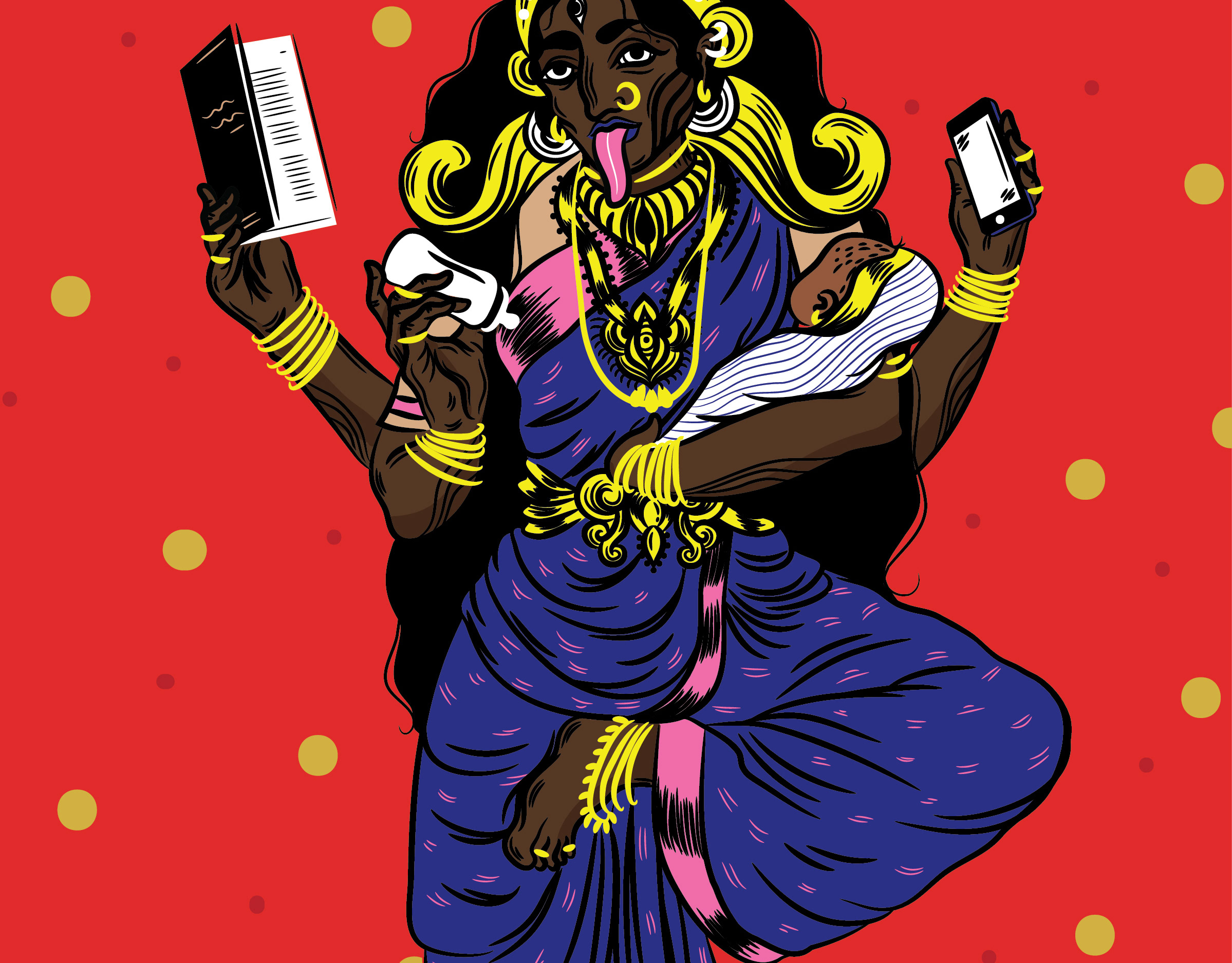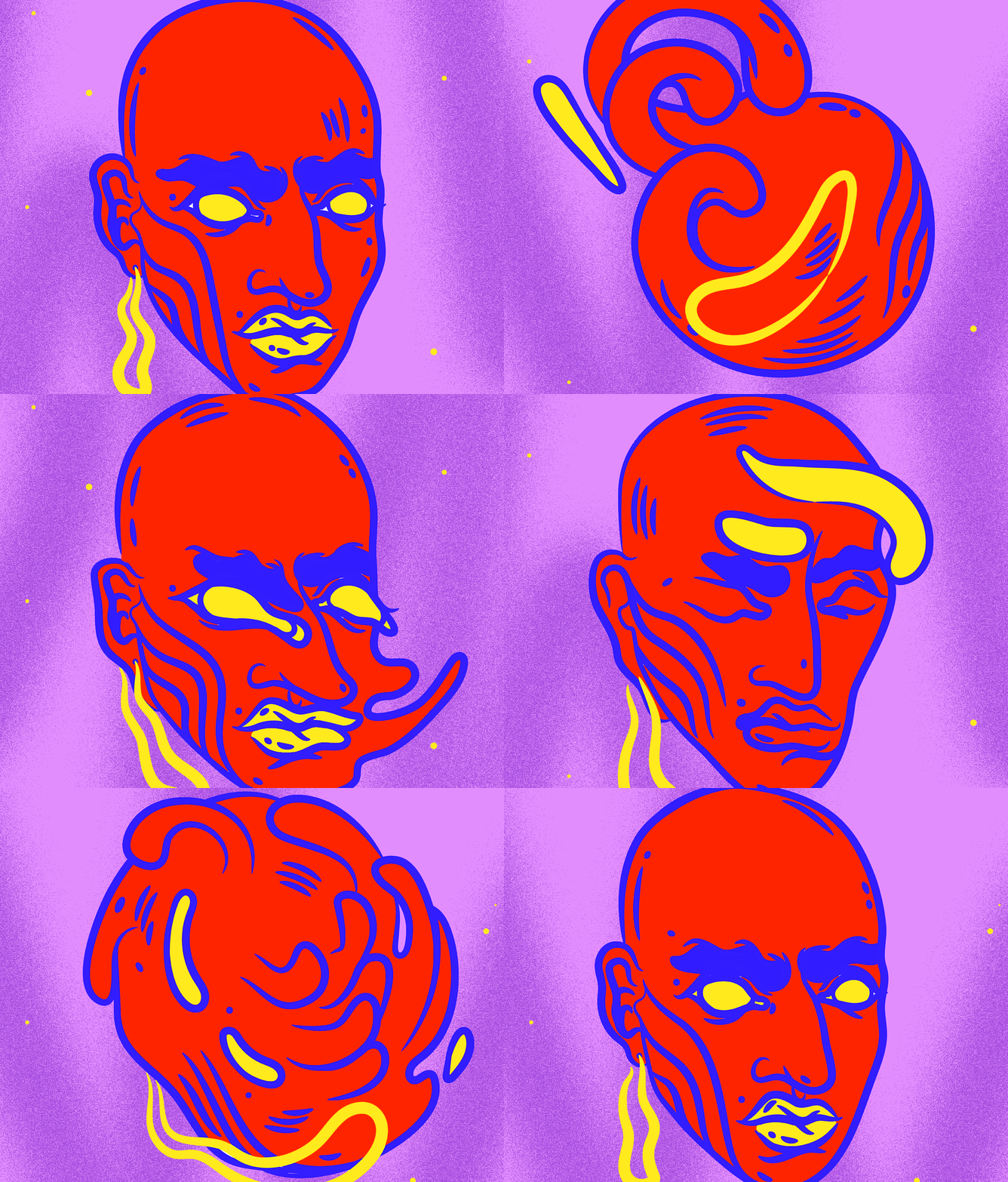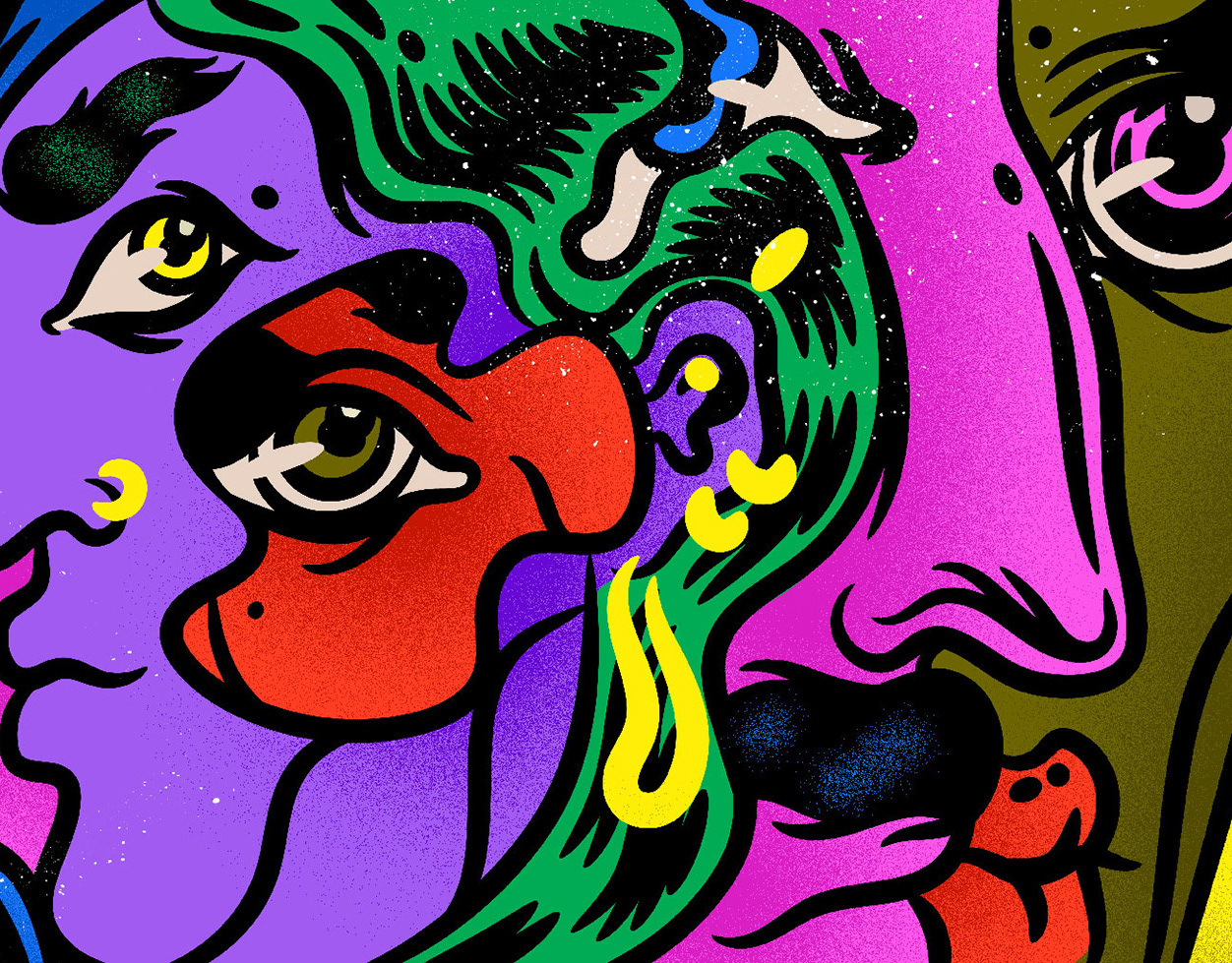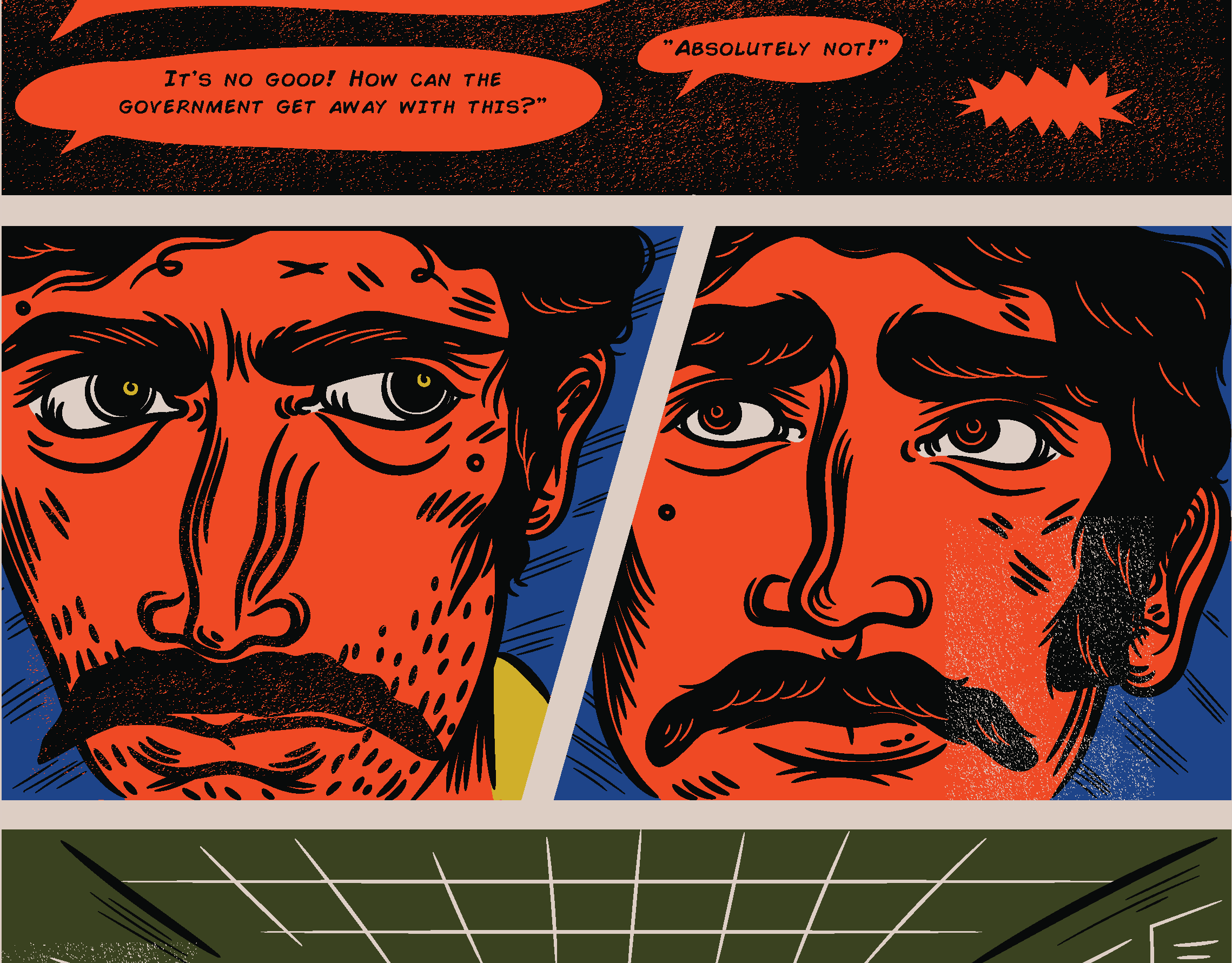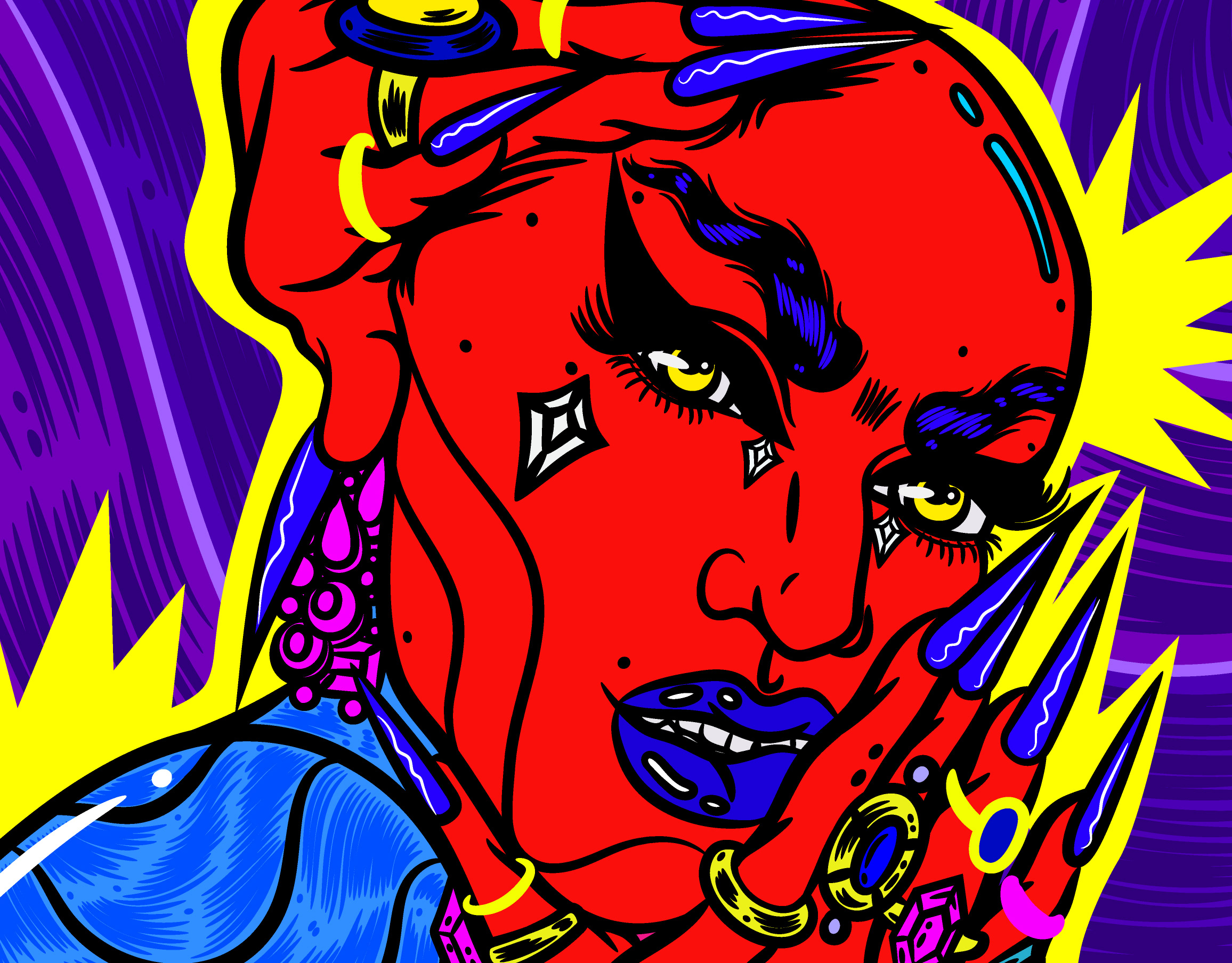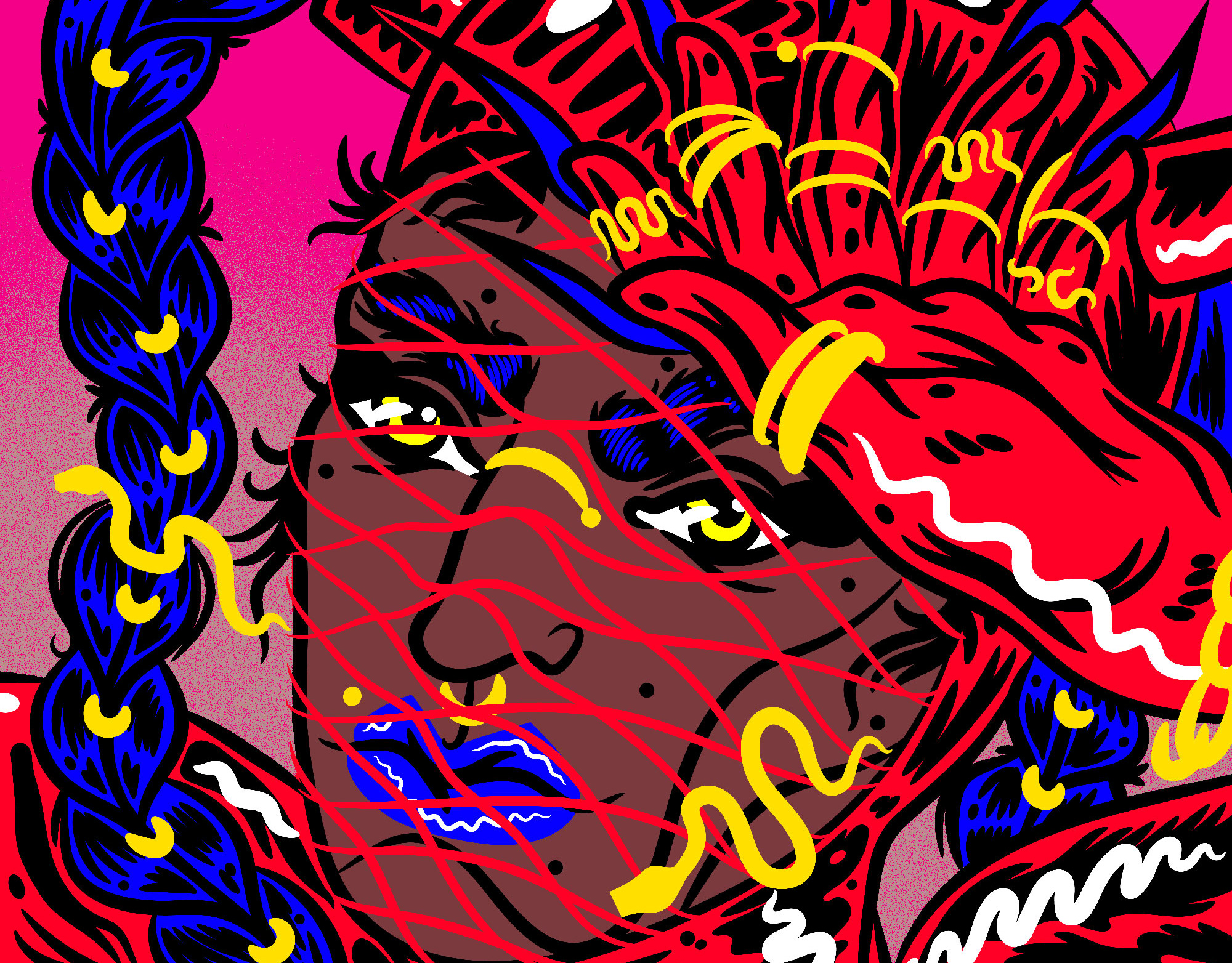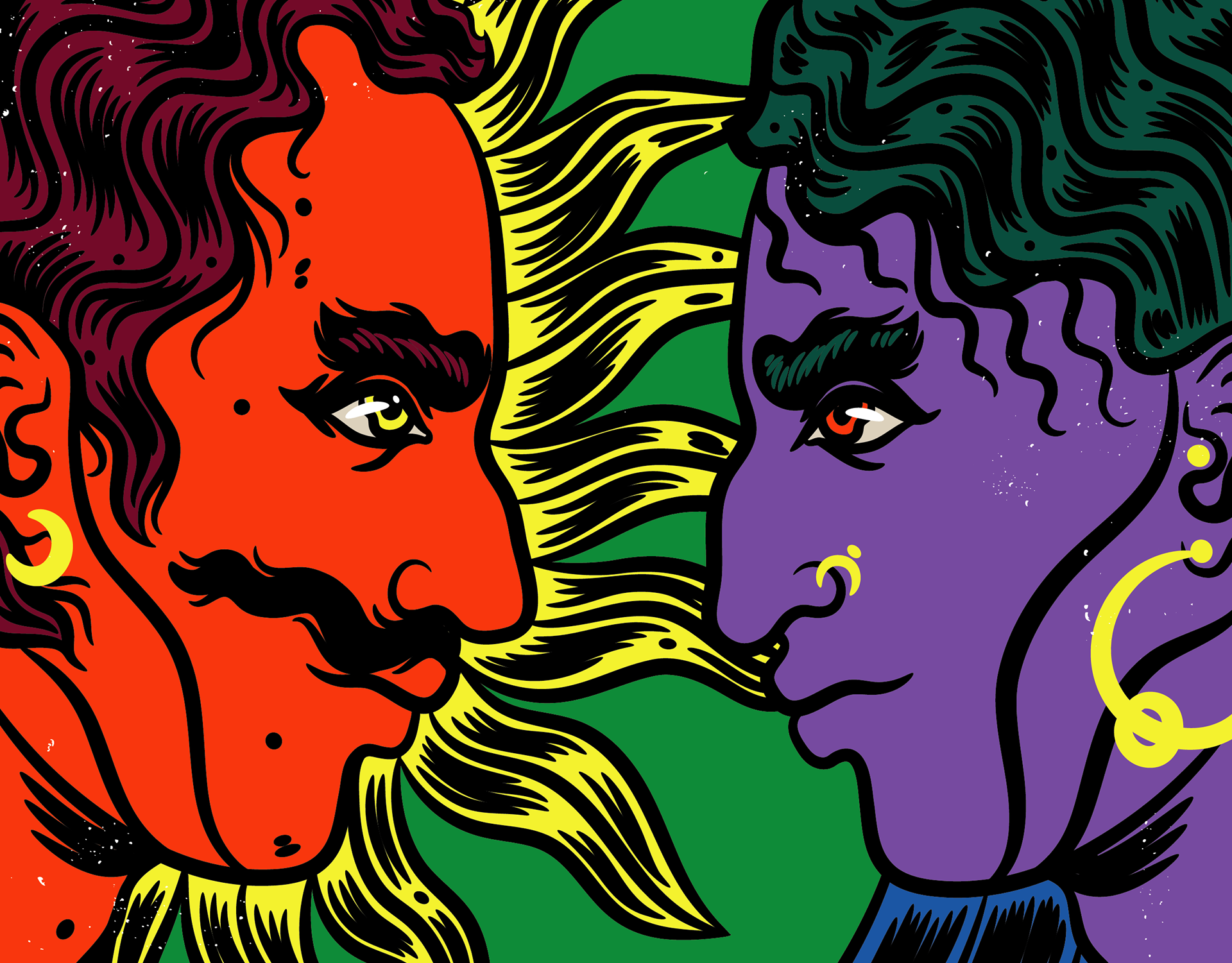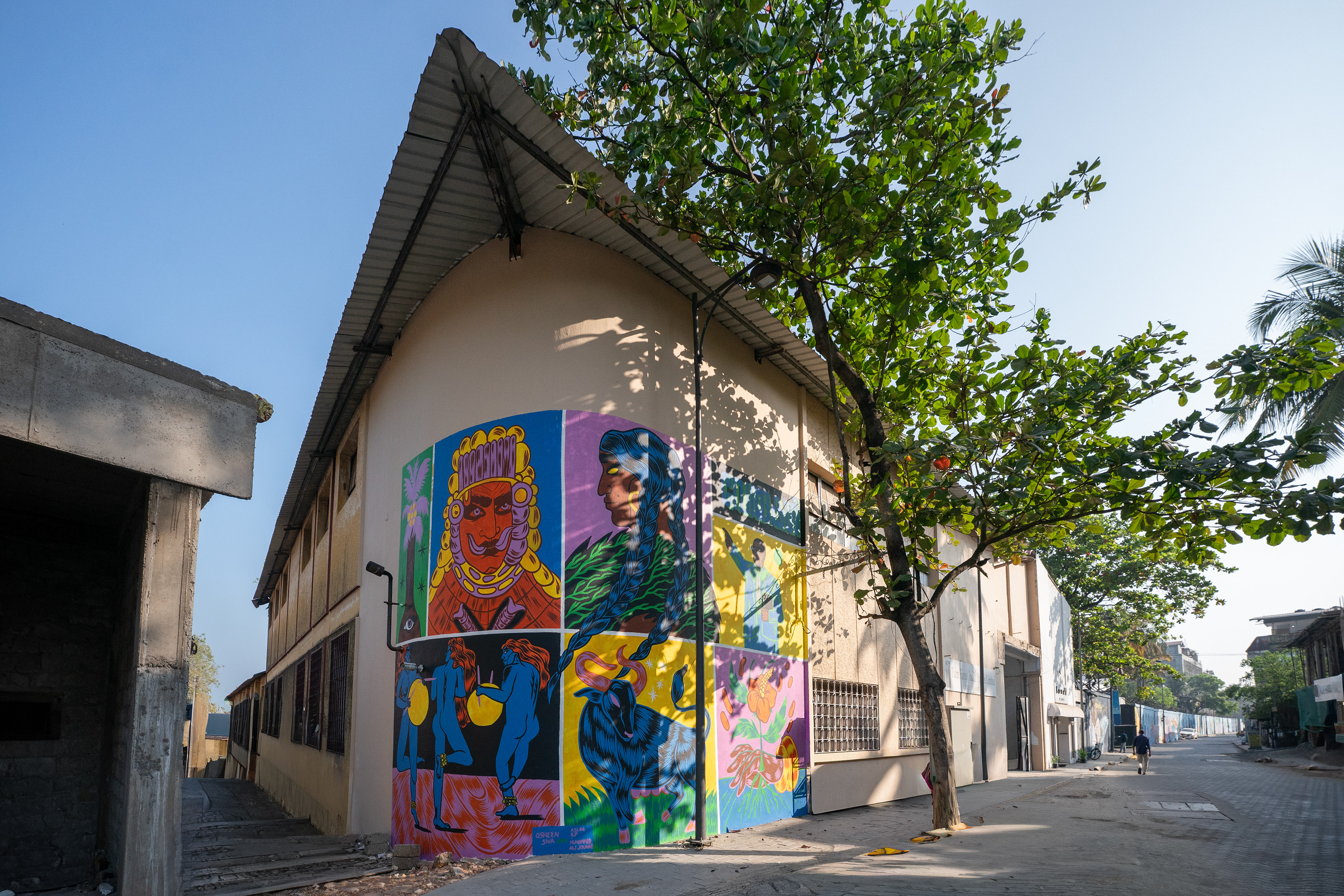
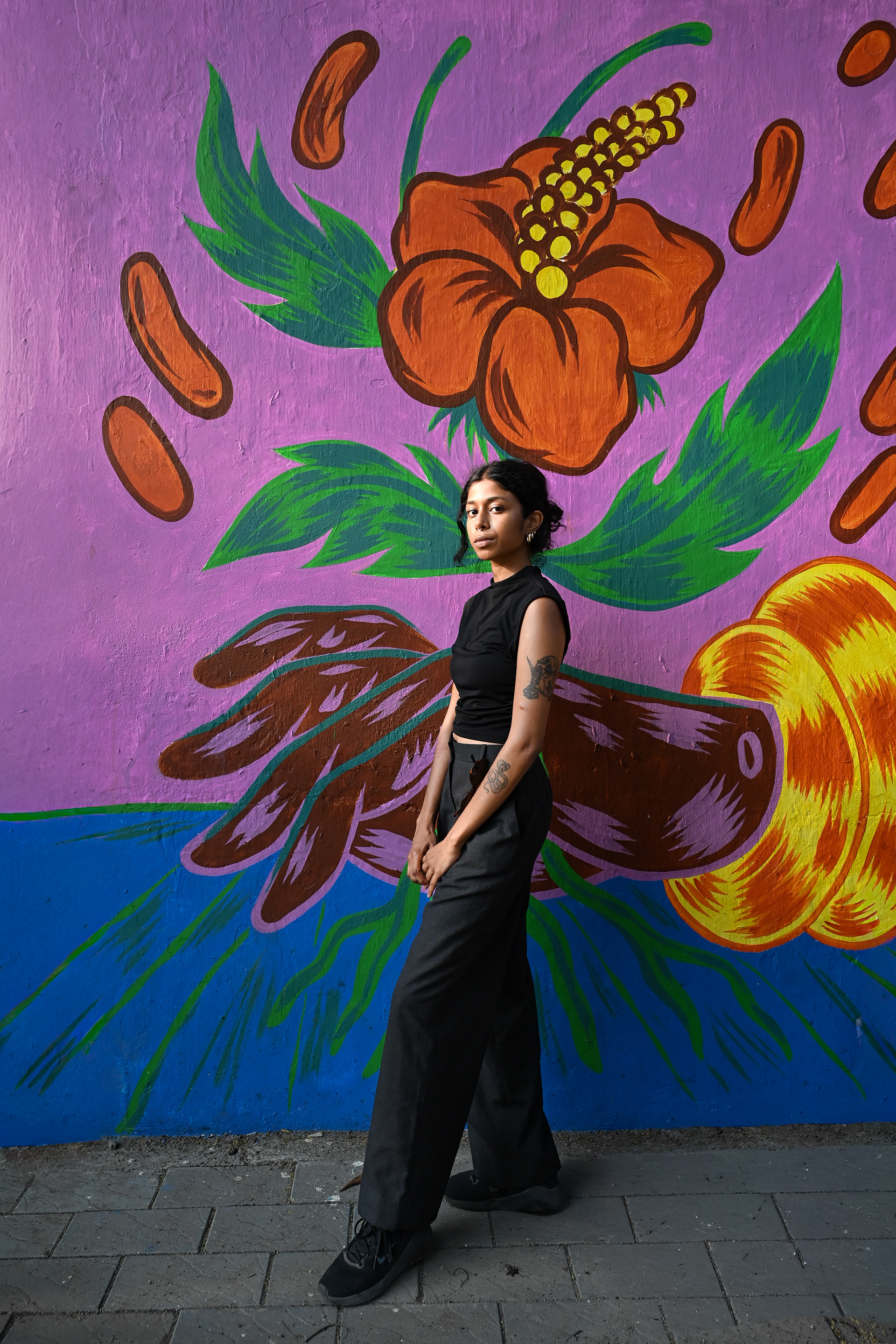
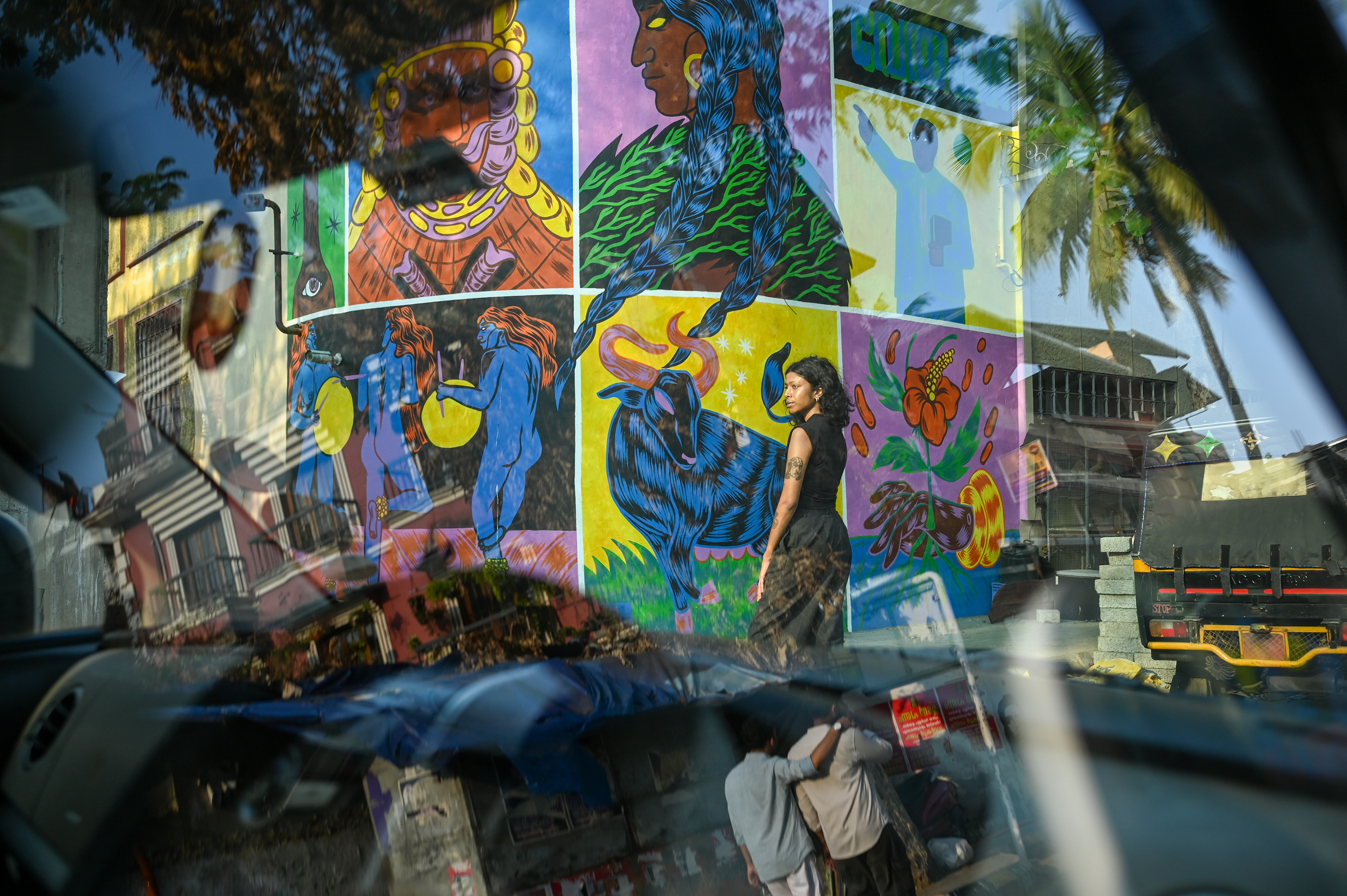

Osheen Siva’s mural for Kochi-Muziris Biennale engages Dalit visuality and counter-archival practice that foregrounds caste-oppressed cultural forms and histories of Tamil Nadu and Kerala in South India. The panels in the composition embody cultural, political, and symbolic references that collectively articulate a continuum of struggle, resilience, and rootedness. Central to the work is a hybridization of body and nature operating as a metaphor for Dalit endurance: the figure is not merely grounded in the land but emerges from it, suggesting an epistemology shaped by labour, ecology, and inheritance. The artwork references caste-oppressed performance traditions, including Parai Attam from Tamil Nadu and Theyyam from Kerala. Parai Attam (historically associated reductively with the Pariyar பறையார் Dalit community performing in funeral rites, a community that Siva belongs to) is represented through figures performing parai drumming, reimagined as an emblem of joy, protest, and persistence. Theyyam, predominantly performed by the lower-caste communities in Kerala; the performers for the duration of the ritual embody god and therefore temporarily subvert caste hierarchy. The figure of the buffalo operates as a Dalit symbol of reinterpreting myth and labour that contests Brahmanical iconographic hierarchies that privilege the cow, instead affirming agrarian toil, strength, and subaltern cosmologies. Similarly, the presence of Dr. B. R. Ambedkar situates the mural within an explicit Ambedkarite framework. The typography in Malayalam script spells the Tamil word Vergal (roots). “Roots” here signifies lineage, land-based knowledge systems, and enduring collective memory; it also gestures toward modes of resistance that proliferate horizontally rather than hierarchically. The mural functions as a counter-archive in public space, reclaiming visibility for Dalit and caste-oppressed aesthetics that have historically been marginalized or appropriated.